
Tedros said that the war in the Middle East has reached a perilous stage with strikes reportedly hitting the Natanz Enrichment Complex in Iran, and the Israeli city of Dimona, where a nuclear facility is located.

On August 6 and August 9 of 1945, warfare changed forever when the United States dropped two atomic bombs on Japan, devastating the cities of Hiroshima and Nagasaki and killing more than 100,000 people. The attack on the people of Hiroshima at 8:15 a.m. on August 6, 1945, and the second attack on the city of Nagasaki at 11:02 am on August 9 killed and wounded hundreds of thousands of unsuspecting men, women, and children in a horrible blast of fire and radiation, followed by deadly fallout. In years that followed, those who survived -- the hibakusha -- suffered from the trauma of the experience and from the long-term effects of their exposure to radiation from the weapons. Before the blast, they were thriving cities. In a flash, they became desolate wastelands. Seventy-five years later, take a glimpse at the destruction.
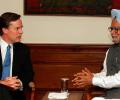
The India-US nuclear deal was aimed at ending India's nuclear isolation and nuclear apartheid, recalls Rup Narayan Das.
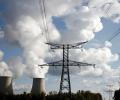
In-principle approval has been accorded to a site in Maharashtra's Jaitapur for setting up six nuclear power reactors of 1,650 MW each in technical cooperation with France, the government said on Thursday.

The Chernobyl nuclear power plant, which was taken over by Russian forces last month, has stopped transmitting data to the International Atomic Energy Agency (IAEA), the United Nations atomic watchdog has said, expressing deep concern for the staff working under Russian troops at the nuclear site in northern Ukraine.

The entire area has been cordoned off and National Disaster Management Authority has also been informed about the incident.
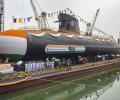
The status of the current submarine force level is alarming and we need to address the threat perceptions expeditiously. Critical decisions pertaining to national security cannot be delayed any further due to the rapidly changing maritime threat perceptions and growing strategic importance of the Indian Ocean region, asserts Commodore Venugopal Menon (retd).

'If it works, something good can come out of this tragedy for the common public good,' say Dr Prasad Gadgil and Dr Kunal Basu.
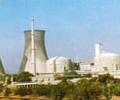
'The leak is likely to continue for some time before it becomes stable, but this is something that NPCIL, who is the plant operator, will have to do. For this, we have to plan very carefully.'

Accompanied by Japanese Prime Minister Shinzo Abe, Obama lay flowers at the cenotaph in Hiroshima, which sits in the shadow of a domed building, whose skeleton has been left standing in silent testament to the victims of the first ever nuclear attack.

'With two nuclear neighbours, how likely is it for our armed forces to battle in a contaminated environment that could include nuclear, biological or chemical attacks by the adversary?' 'Are we prepared for the threat?' Brigadier S K Chatterji (retd) explains the meaning and significance of Operation Vijay Prahar.

India's nuclear establishment is continuing its march of folly at the expense of safety in the false belief that atomic power is the energy of the future. It's not. Nuclear power is in relentless global decline, says Praful Bidwai.

Patients from any part of the country will soon need to travel no more than three hours for treatment of the kind available in large metros.

The biological weapons convention is a non-starter in spite of the efforts of many states in the world for the last five decades mainly because the US is not ready to accept the 'verification protocol' which could allow the formation of some official mechanism for inspections, says Ajay Lele.

Science in India has developed a great deal since C V Raman, particularly after the country gained Independence but we are yet to win a Nobel prize in physics, chemistry or medicine. Is it a reflection on the quality of Indian science? Or it has to do with the politics of Nobel prizes, as is often believed, asks Dinesh C Sharma.
